Wall repairs
Drywall Repair or Replacement: How to Choose
A local patch is often appropriate when the surrounding board is dry, firm and secure. Replacement becomes more useful when damage spreads, the board loses strength or the surface cannot support a durable repair.
Start with the condition around the damage
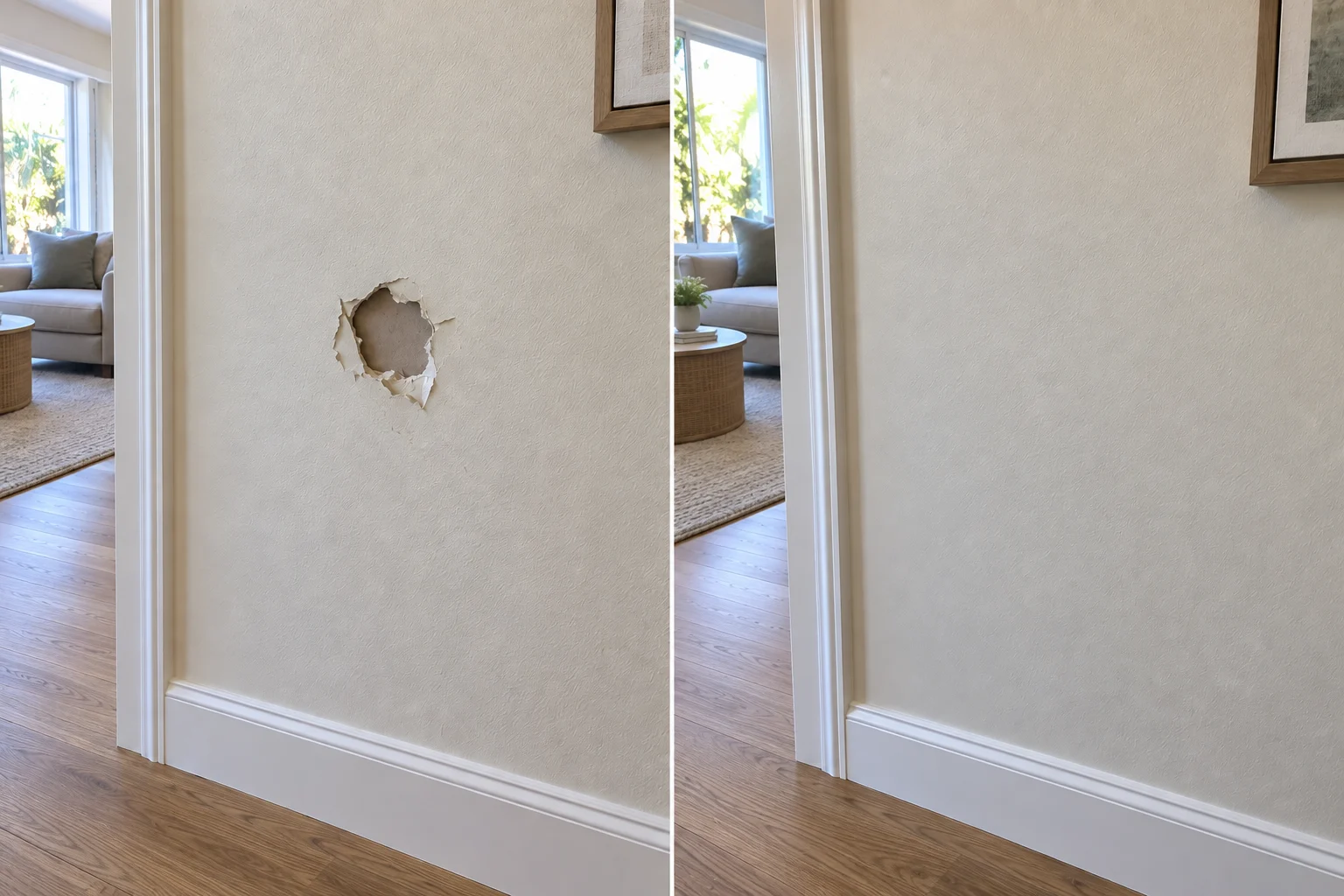
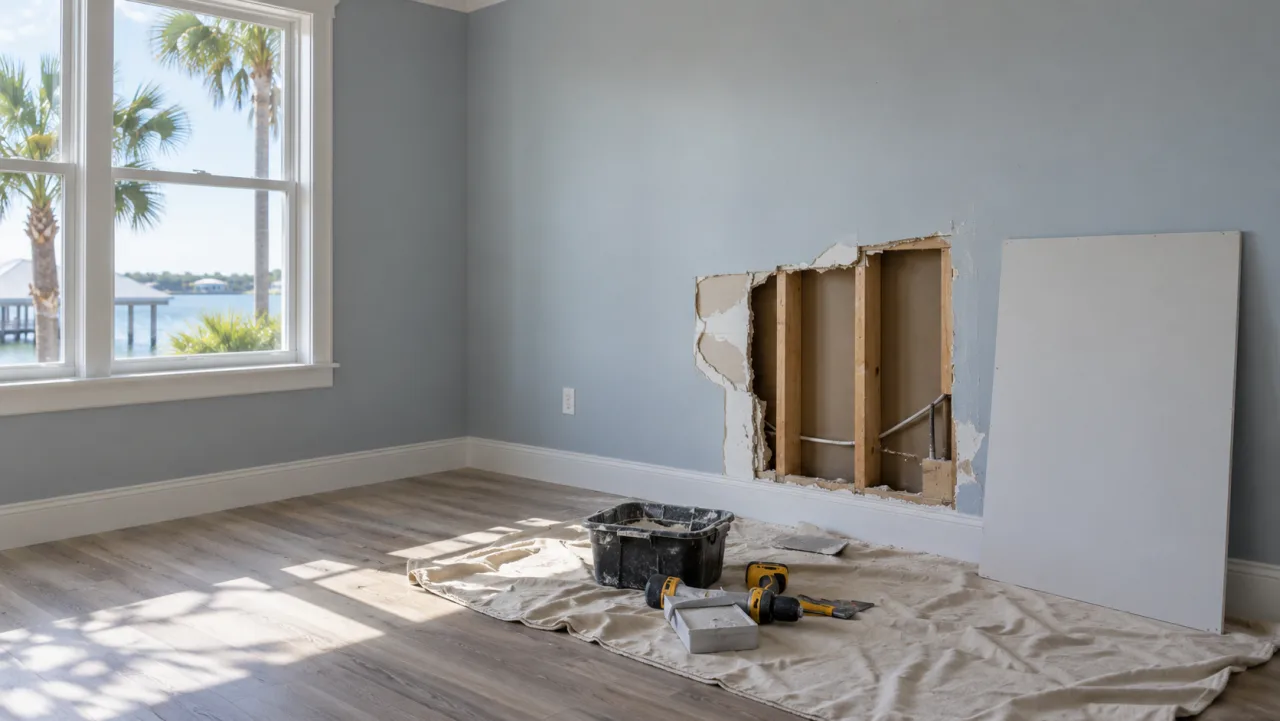
The visible hole does not define the entire repair. A contractor looks for solid edges, secure fasteners and a surface that can hold joint treatment. An isolated impact opening surrounded by sound drywall is different from a wall with swollen paper or crumbling gypsum. Adding compound over weak material leaves the repair attached to an unreliable base.
Why a larger cut can create a better patch
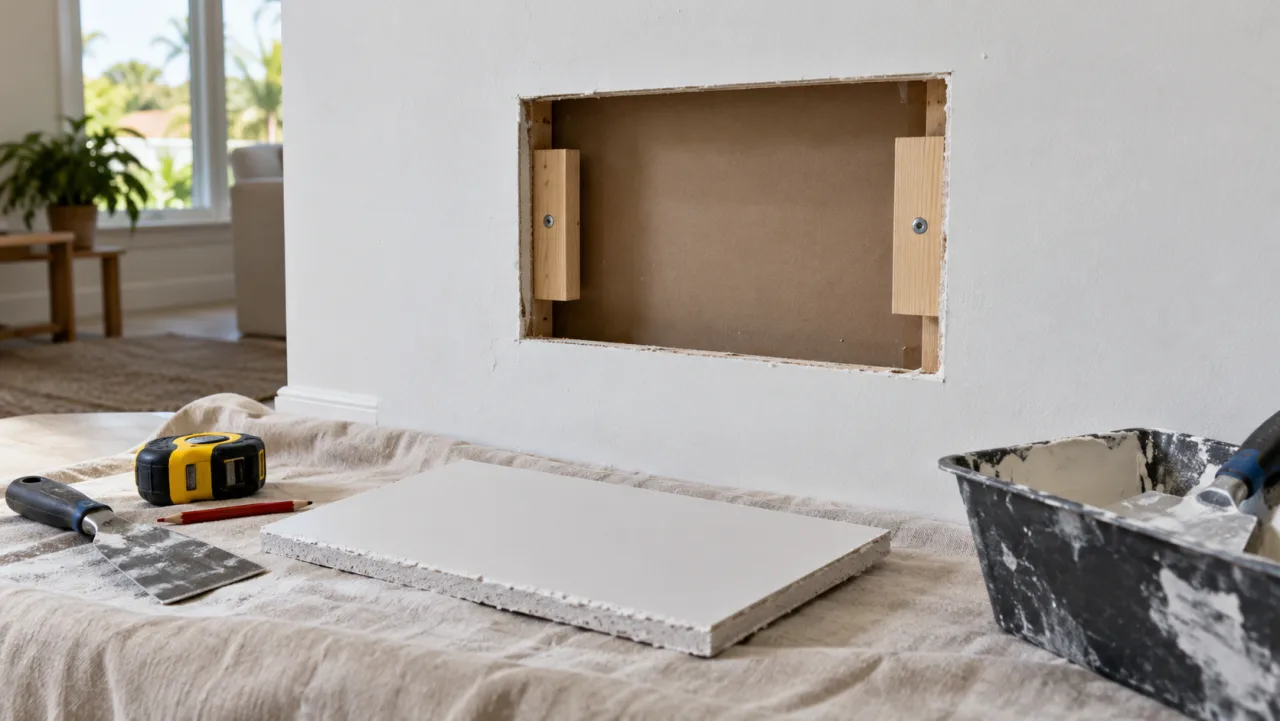
A clean, supported opening can be easier to close properly than an irregular broken edge. The repair may extend beyond the original damage so replacement board can be secured and the joints placed on sound material. That does not automatically mean the whole wall needs replacement. Ask the contractor to explain the proposed cut lines and how the new piece will be supported.
- DryNo unresolved moisture source
- FirmBoard holds its shape
- SecureEdges and supports are sound
When replacement deserves a closer look
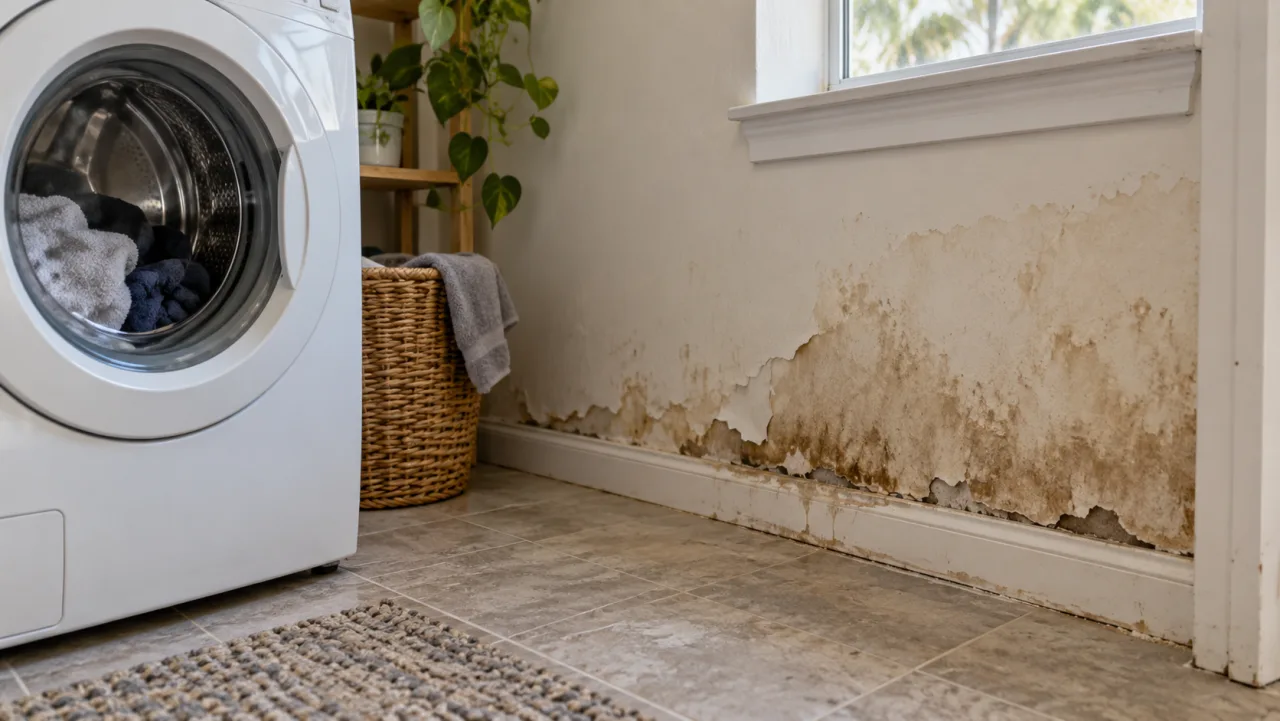
Multiple nearby openings, widespread delamination or repeated failed repairs may make a larger replacement more practical. Water damage needs a different first question: has the source been stopped and the assembly assessed? New board should not hide a continuing leak. If damage suggests a moisture or structural problem, resolve that issue before choosing a cosmetic repair.
Keep the finish in the decision
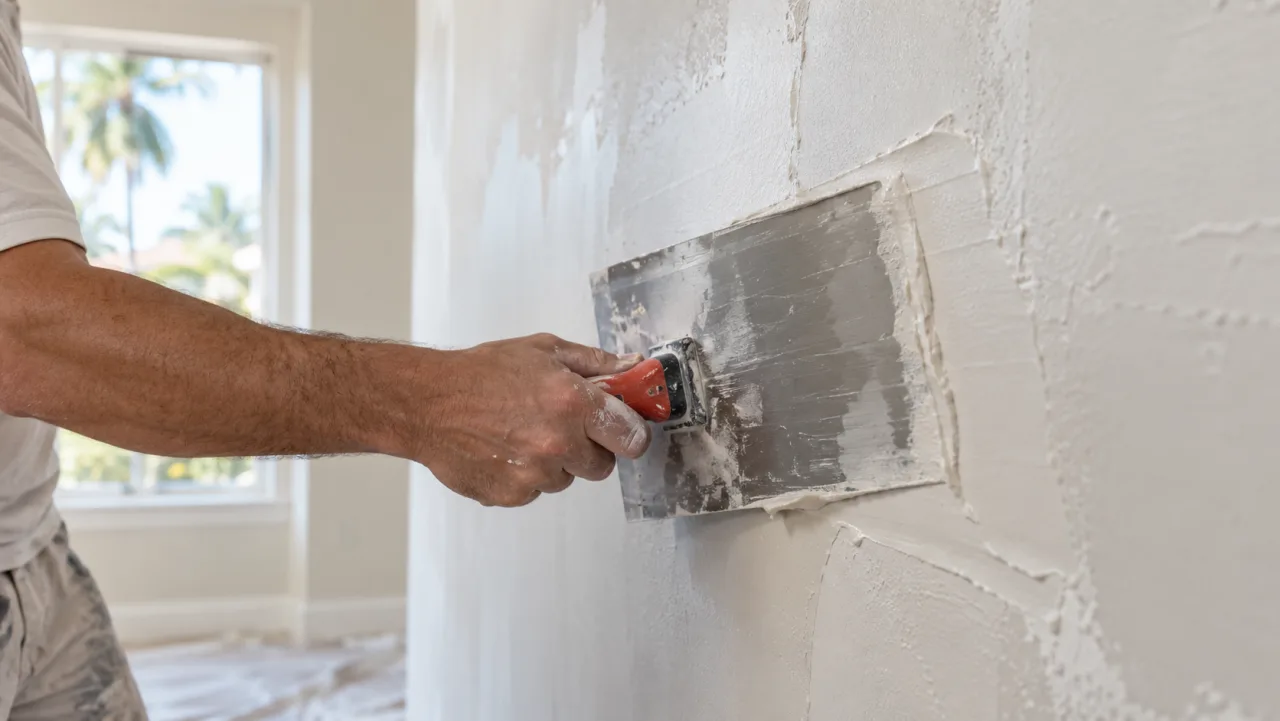
Even a well-supported patch can remain visible if its texture or paint sheen differs. A broader skim coat or wall repaint can sometimes solve a finish problem without replacing every panel. Conversely, repeatedly coating loose or badly damaged board will not restore its integrity. Compare options that include the same final appearance rather than comparing an unfinished patch with a fully refinished wall.
What to ask at the estimate
Ask what is sound enough to keep, what needs removal and where the finished work will stop. Find out whether texture matching and primer are included. For a Sarasota home with a previous leak, share the repair history and drying information. Photos of the whole surface and the individual damaged spots help us explain the choices before a site visit.
What to send us
A few clear photos and these details help us understand your project:
- Photograph every damaged spot
- Explain previous repairs
- Identify any leak history
- Agree on the finish boundary
Common questions
Does a large hole mean the whole wall must be replaced?
Not necessarily. The condition and support around the opening matter more than size alone.
Can texture be changed without replacing drywall?
Sometimes. A sound surface may be suitable for preparation and skim coating; loose or damaged material needs assessment first.