Textures & finishes
Orange Peel vs. Knockdown Texture: What Is on Your Wall?
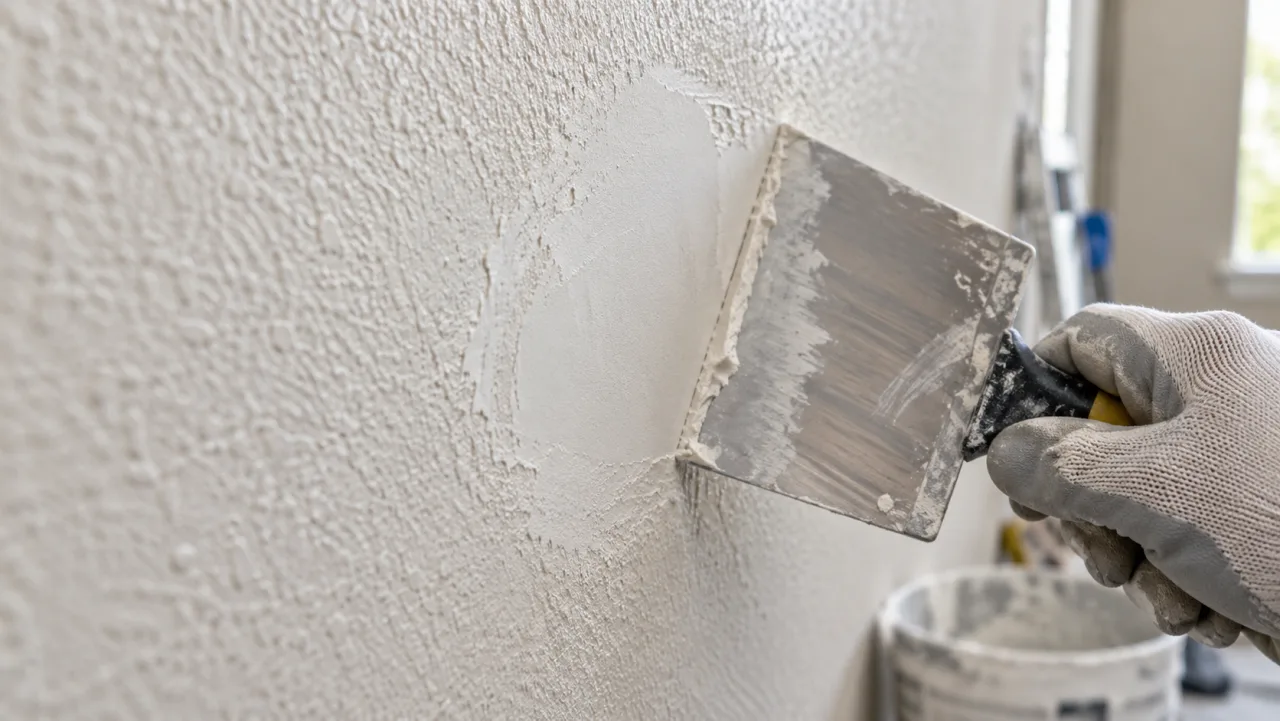
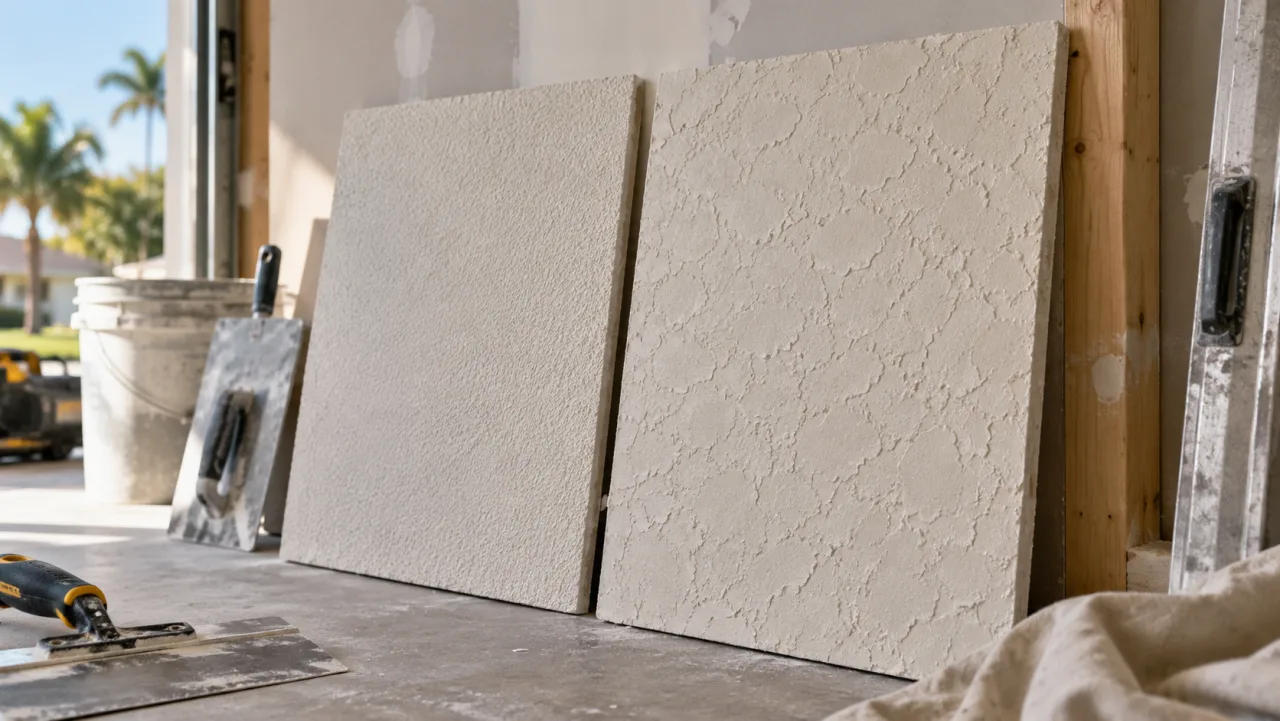
Orange peel usually looks like small rounded bumps. Knockdown usually has broader flattened areas. For a repair, matching the existing scale and density matters as much as choosing the correct name.
Recognize orange peel
Look for a fine to coarse pebbled surface rather than broad, flattened islands. Several painted layers can soften its definition. A very light pattern may be difficult to see straight on, so use an angled photograph with ordinary room light. Avoid making the decision from an online sample alone because your wall may have a different application and paint history.
Recognize knockdown
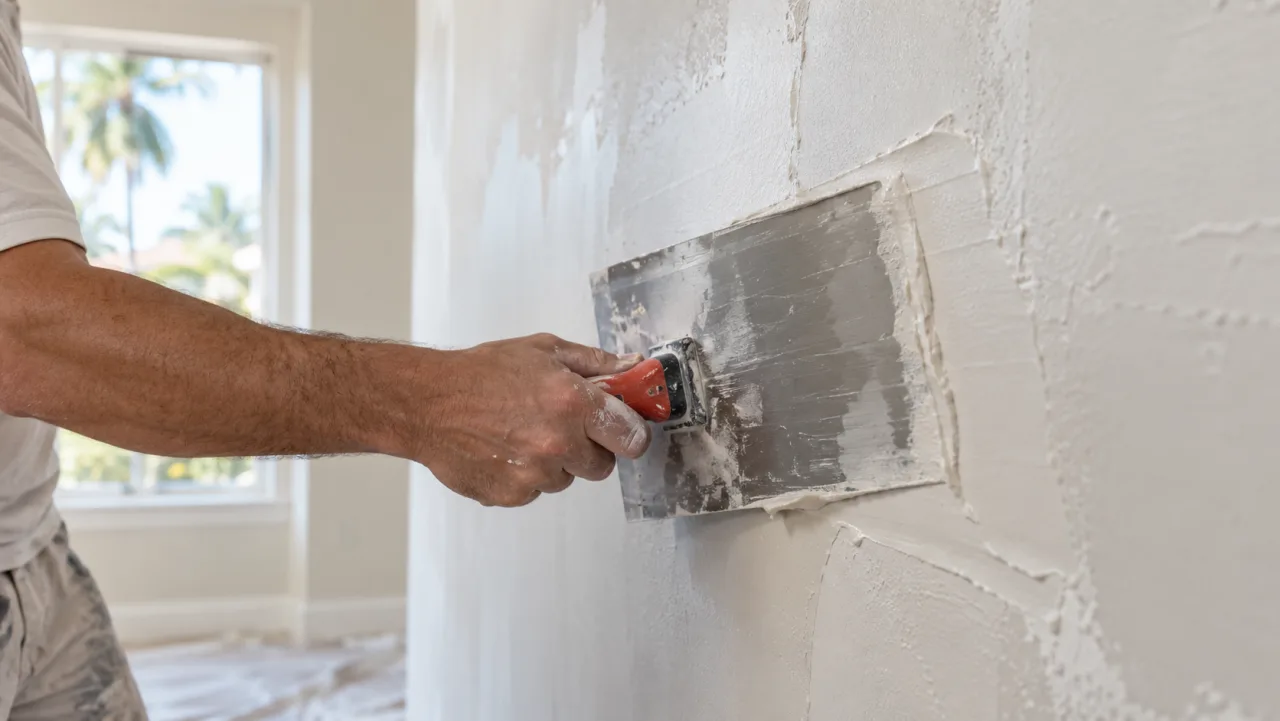
Knockdown typically has flatter irregular patches with lower spaces between them. The flattened areas can be wide or small and closely or loosely spaced. Two ceilings can both be called knockdown and still look different. When requesting repair, show a section of undamaged ceiling as well as the opening so there is a reference for the match.
- Orange peelRounded, pebbled bumps
- KnockdownFlattened, irregular islands
- MatchCompare size and spacing
Choose continuity for a local repair
For one damaged area, continuing the room’s existing texture is usually the starting point. Changing a small patch to a different pattern creates an obvious boundary. If you want a new finish throughout the room, discuss preparation of the entire surface. The plan is then a refinishing project rather than a simple texture touch-up.
Think about lighting and cleaning
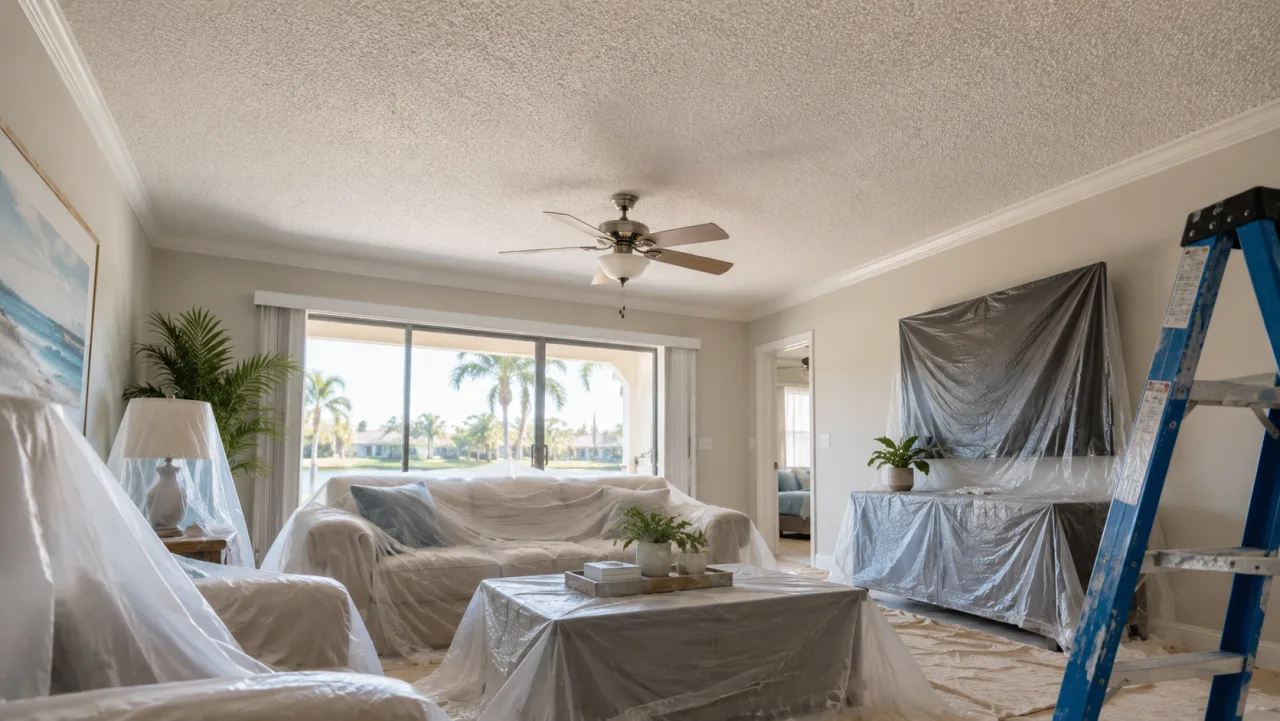
Texture affects how light breaks across a surface and how easily a local imperfection is noticed. A heavy pattern is not a cure for uneven board or poor joint finishing. Consider the result under your actual windows and fixtures. Ask to see a sample at a meaningful size before choosing a new texture for a full wall or ceiling.
What helps us identify yours
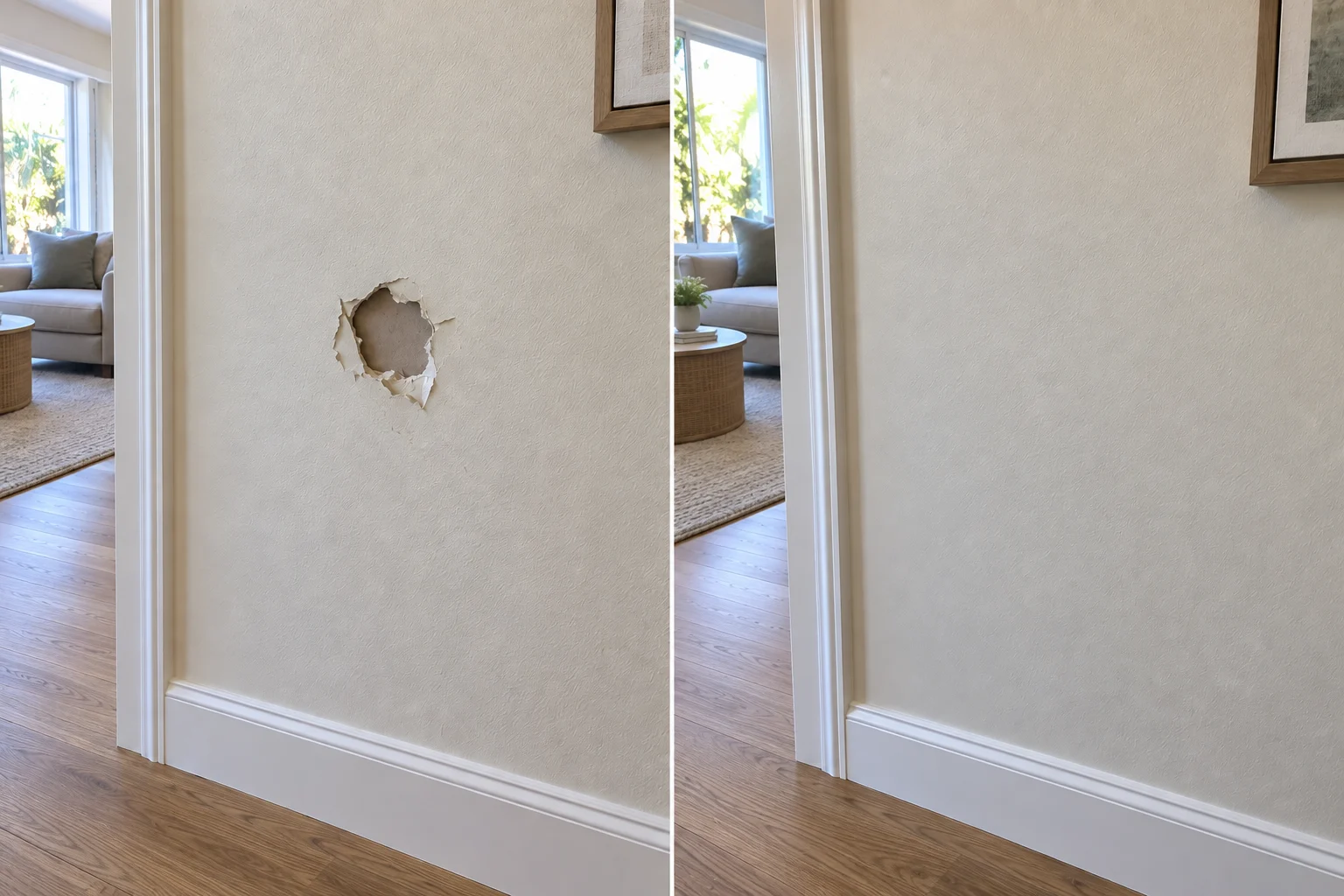
Send a close-up with something that gives scale and a wider view of the room. Say whether the surface is a wall or ceiling and whether it has been repainted recently. You do not need to know the trade name before requesting help. Clear photos let us start with the surface you have instead of guessing from a label.
What to send us
A few clear photos and these details help us understand your project:
- Close-up of undamaged texture
- Photo of the repair area
- Wall or ceiling location
- Recent paint history
Common questions
Is knockdown always heavier than orange peel?
No. Both names include a range of densities and application styles.
Can I change texture in just one corner?
You can change a surface, but a small isolated change is likely to remain noticeable. Discuss the full finishing boundary.