Wall repairs
Nail Holes, Anchors and Door-Knob Damage: Which Repair Fits?
Tiny surface holes, torn anchors and crushed impact damage are different problems. Choose the repair based on how much sound material remains, not just the diameter of the visible mark.
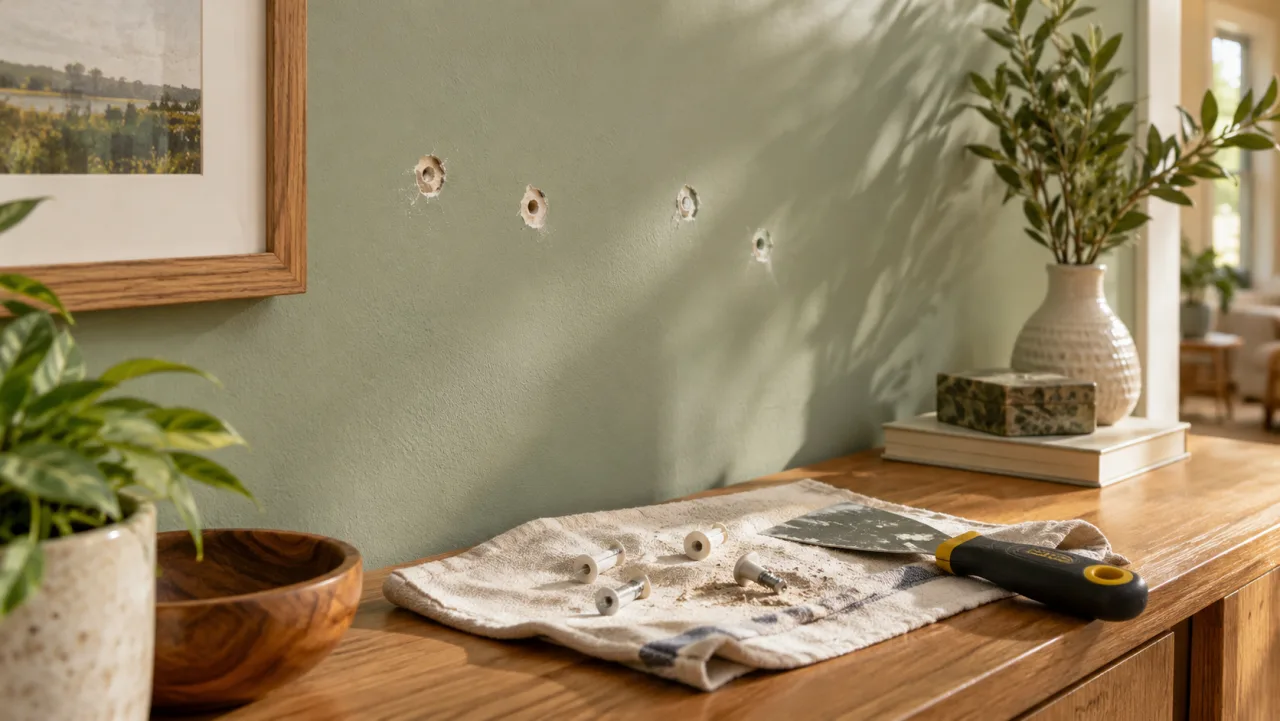
A nail mark is different from a pulled anchor
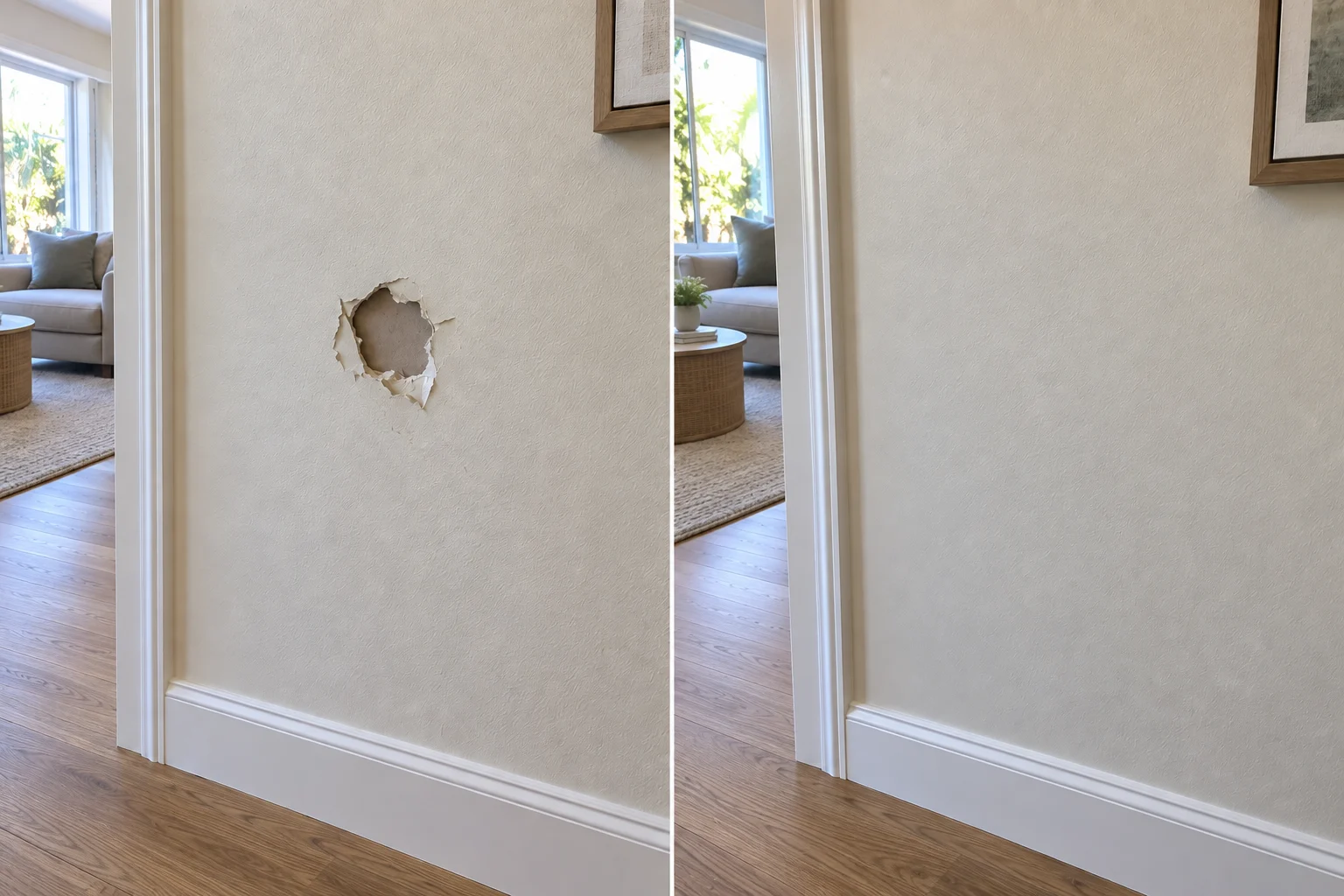
A clean, shallow mark may be a small surface repair. A failed anchor can tear the paper and crush the gypsum behind it, leaving a wider weak area. Paint can disguise that damage until a repair pulls loose. Before reusing a mounting location, consider how the item should be supported; cosmetic filler is not a replacement for an appropriate mounting system.
Watch for raised edges
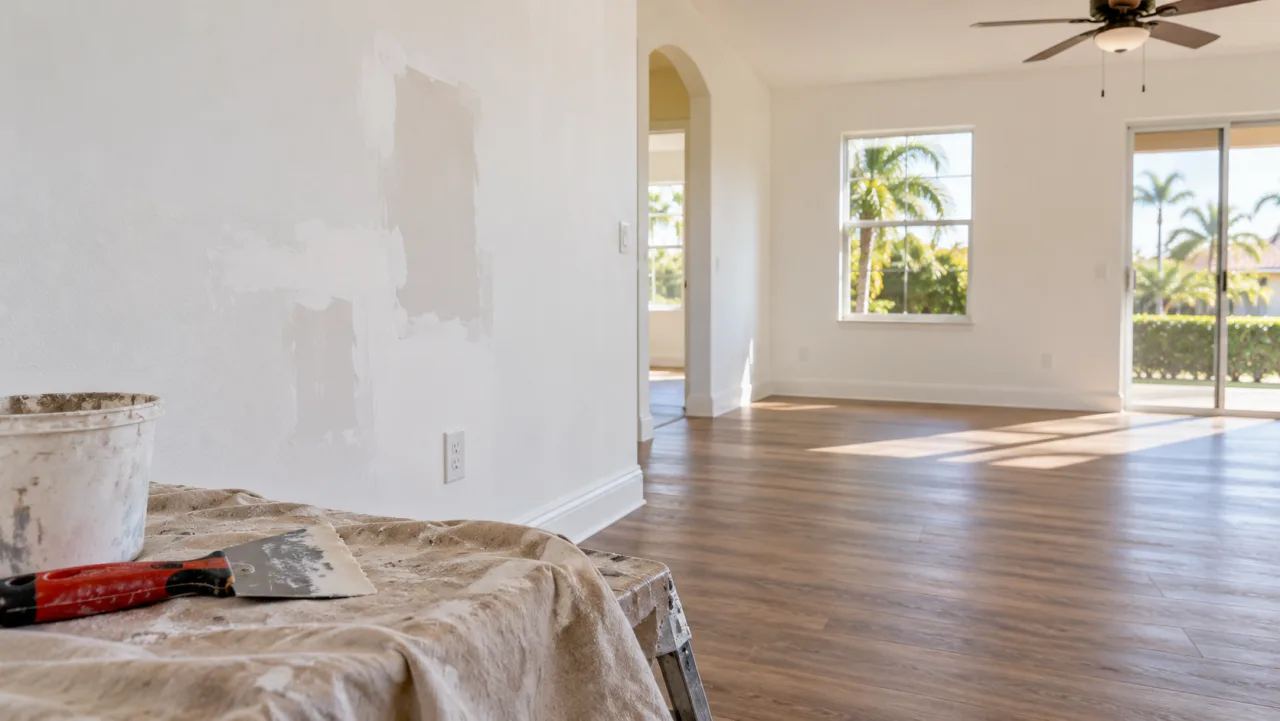
Even small repairs can show when torn paper or a paint ridge remains proud of the surface. Piling filler onto that ridge creates a larger bump. Sound preparation matters more than adding material. If several old mounting holes are clustered together, a contractor may suggest treating them as one finish area so the wall does not become a collection of separate shiny spots.
- Surface markSmall, sound surrounding area
- Torn anchorCheck paper and core
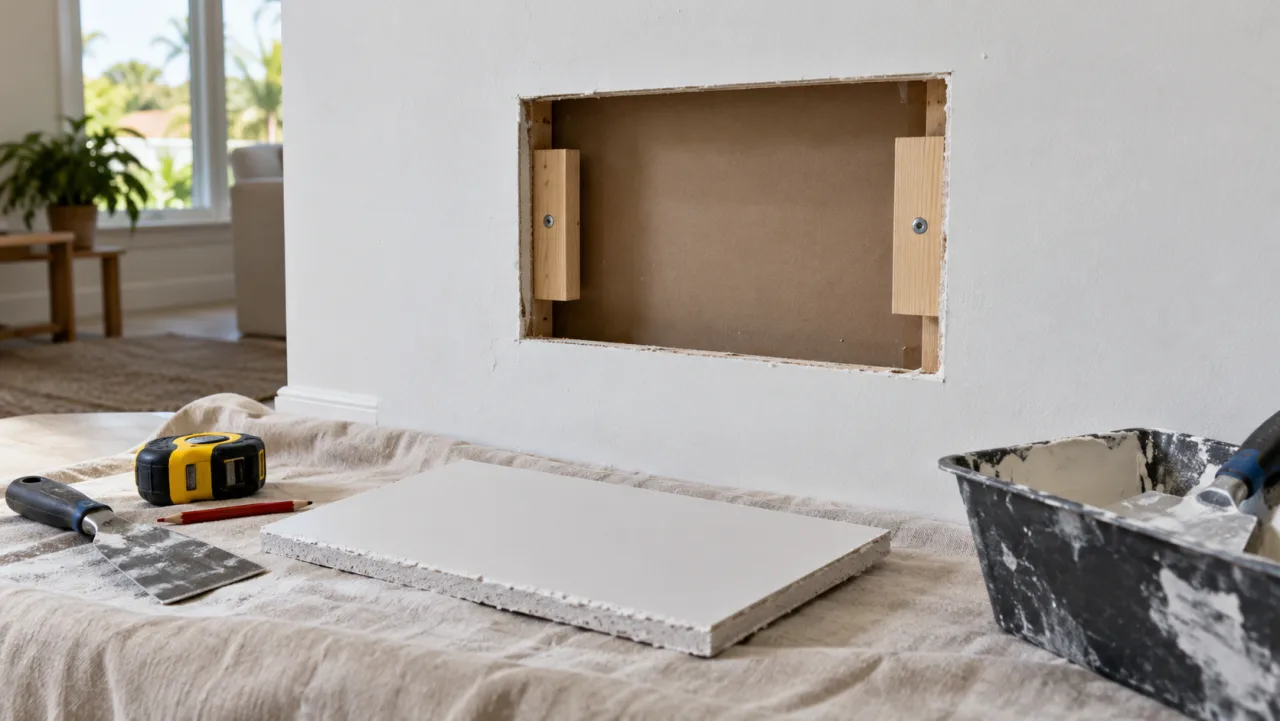
- Broken boardAssess support for a patch
Impact holes need a different approach
A door knob can break the board rather than merely dent the finish. If the opening is unsupported or the surrounding core is crushed, it may need a patch and backing. Correct the repeated source of impact too, such as a missing door stop. Otherwise a carefully repaired surface can be damaged again by the same door.
Plan the paint touch-up
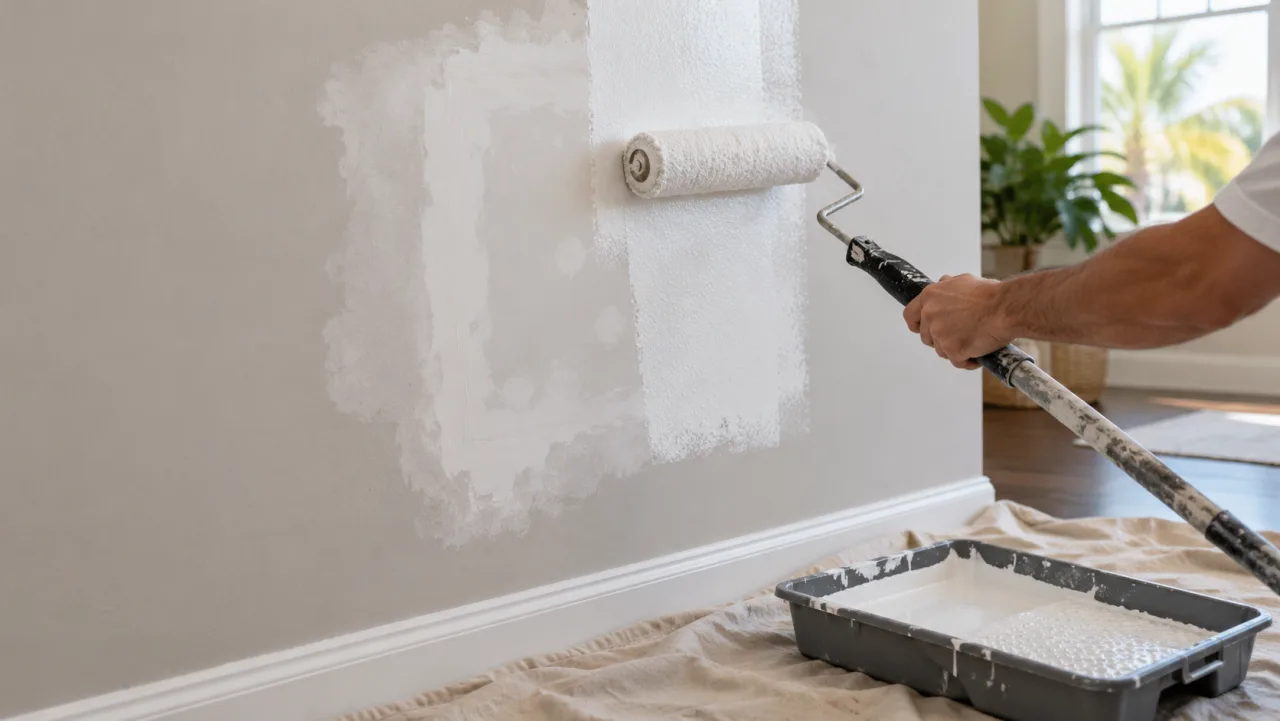
A repaired spot absorbs paint differently from an old coated wall. Primer and the correct sheen matter, particularly beside windows. If many marks are spread across a room, repainting the wall can be more consistent than spot treatment. Ask what the estimate includes so you are not left with finished patches and an unexpected separate paint project.
Before moving out or rearranging a room
Take a wide photo showing all the holes, then photograph the largest or most torn examples. Explain whether they came from picture hooks, shelving, a television bracket or impact. Mention the wall texture and whether paint is available. For rental homes, agree on access and scope with the property owner before scheduling alterations.
What to send us
A few clear photos and these details help us understand your project:
- Number of damaged areas
- Close-up of the largest opening
- Existing texture and paint
- Mounting or impact cause
Common questions
Can I mount something into the repaired filler?
Do not assume a cosmetic repair provides mounting strength. Choose support appropriate to the item and wall construction.
Can many small holes be estimated together?
Yes. An overall photo and a count of the affected walls help define a combined scope.