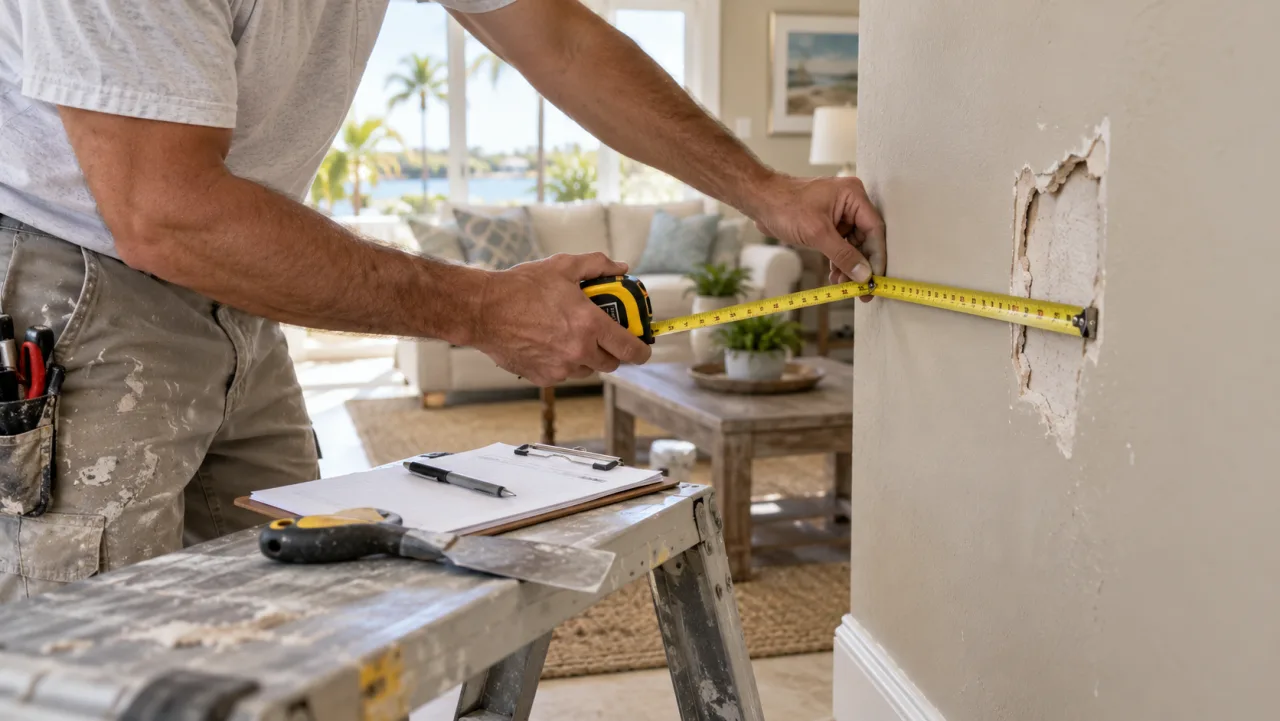
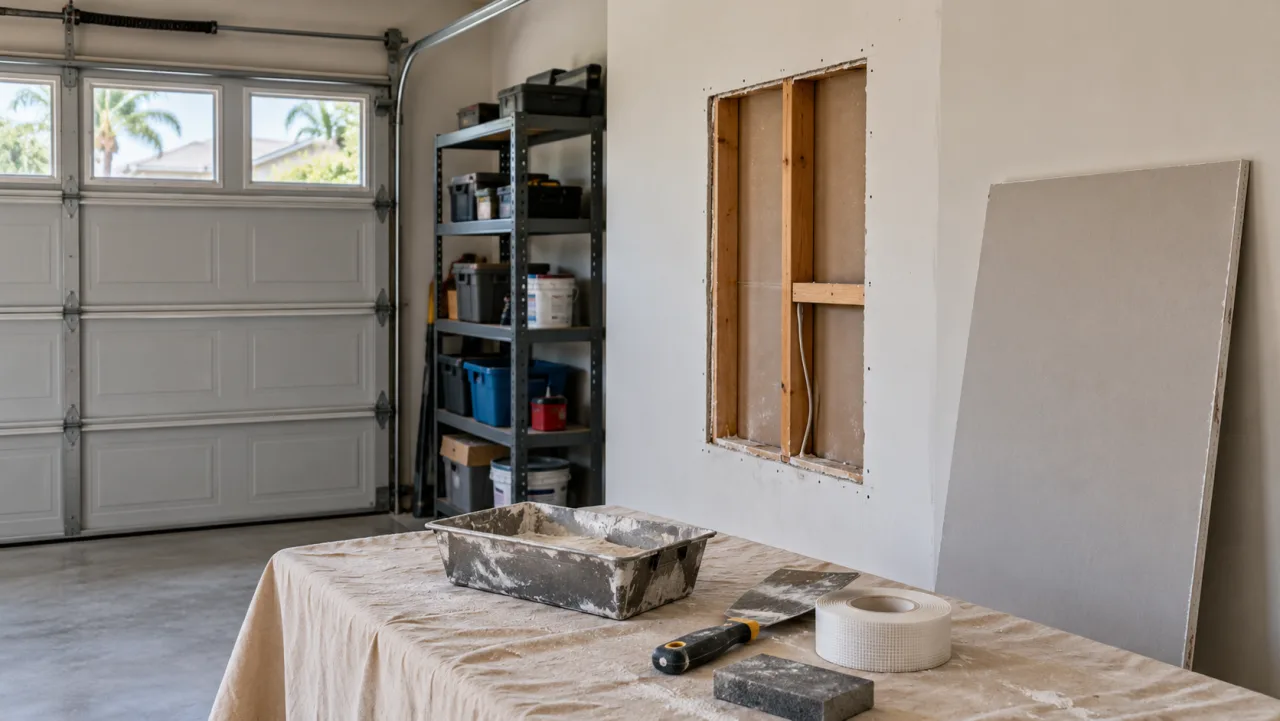
The size of the hole is only part of the price. A useful estimate also accounts for support behind the patch, ceiling access, texture, drying visits and the area that needs paint.
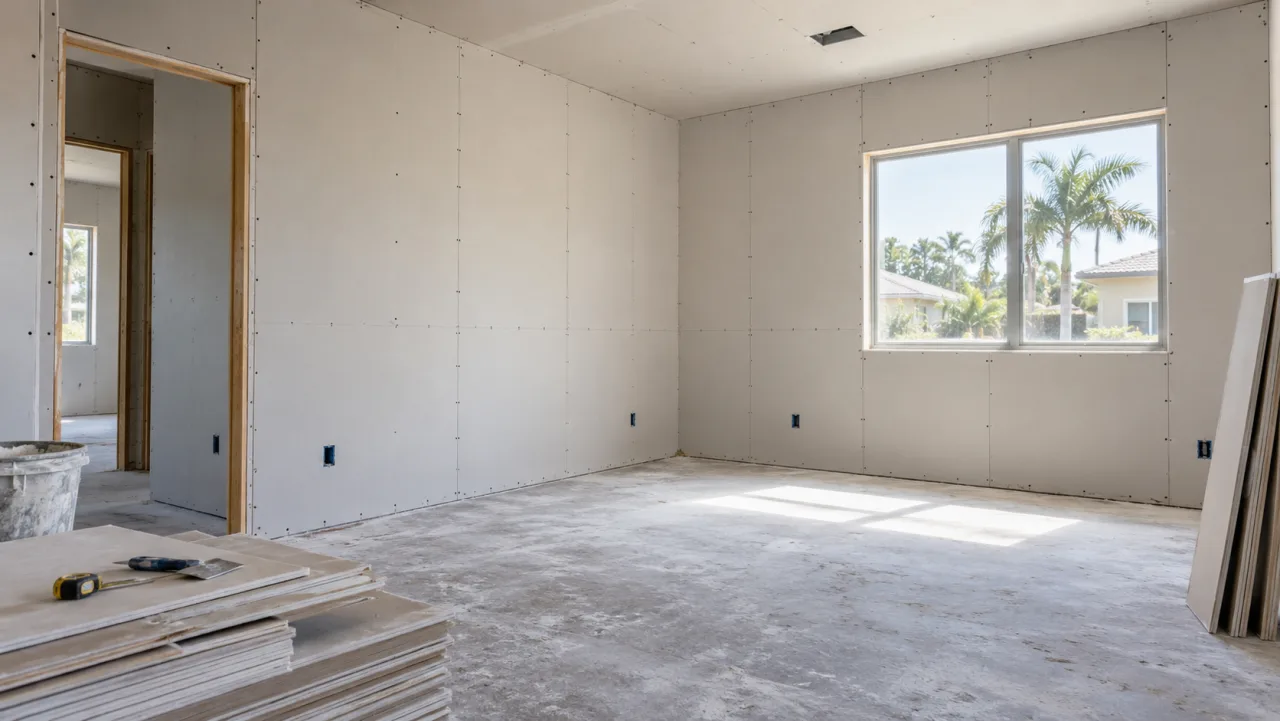
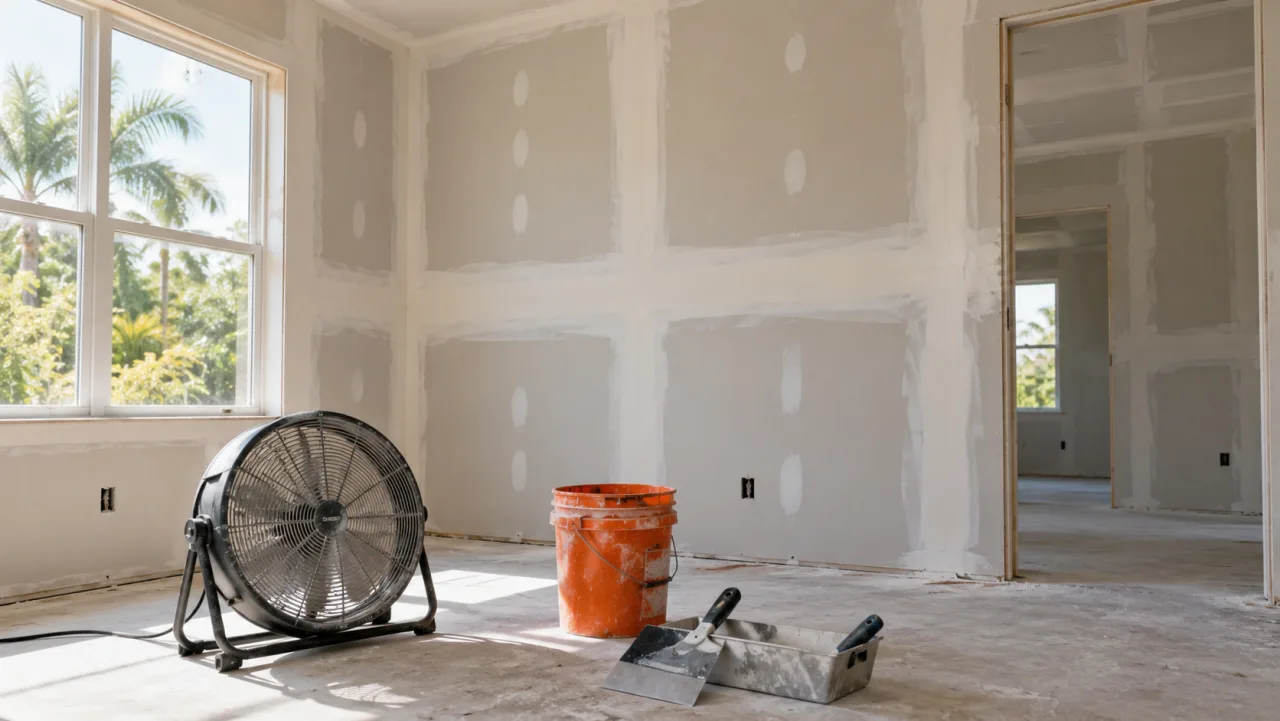
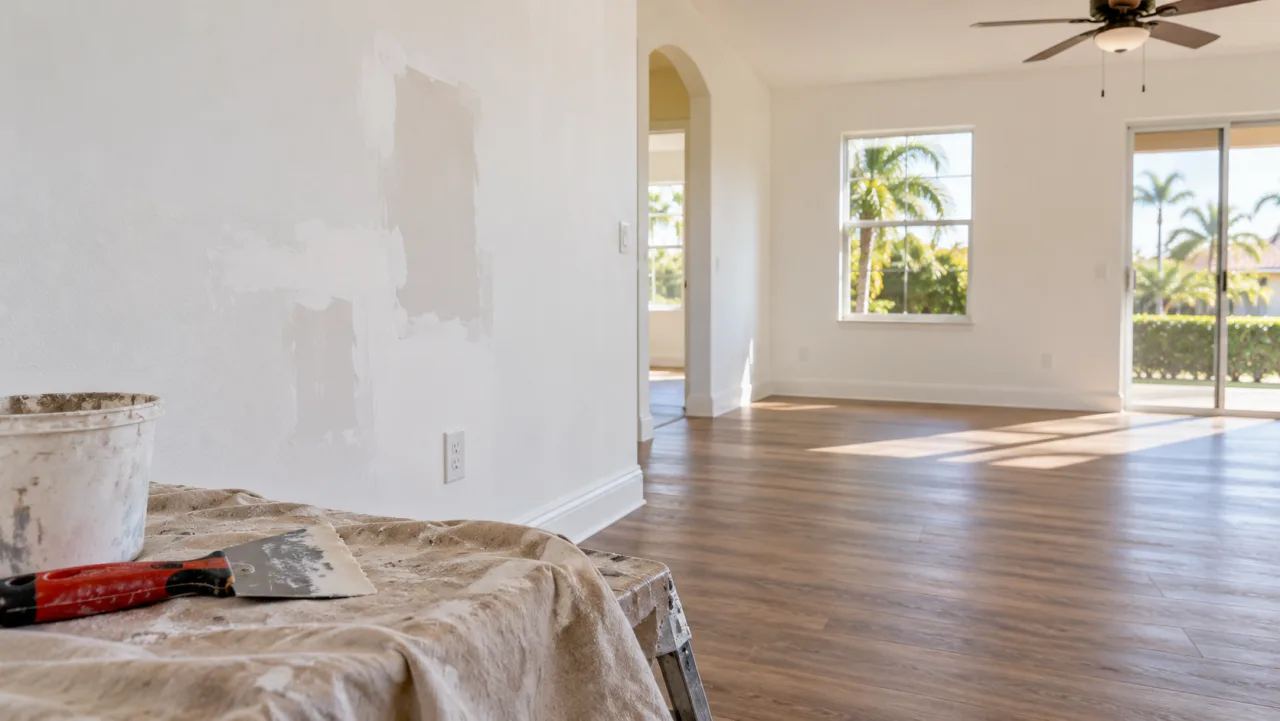
Installation includes more than hanging panels. A complete plan covers readiness of the framing and concealed work, the specified board, joint finishing, drying, texture and the paint handoff.
The hours spent working are not the same as elapsed project time. Joint treatment, texture, primer and paint can each have a separate readiness requirement before the next stage.
Choose replacement board to match the assembly and its exposure. A painted bathroom wall, a tiled wet area and a garage separation are different applications, even if the damaged surface looks similar.
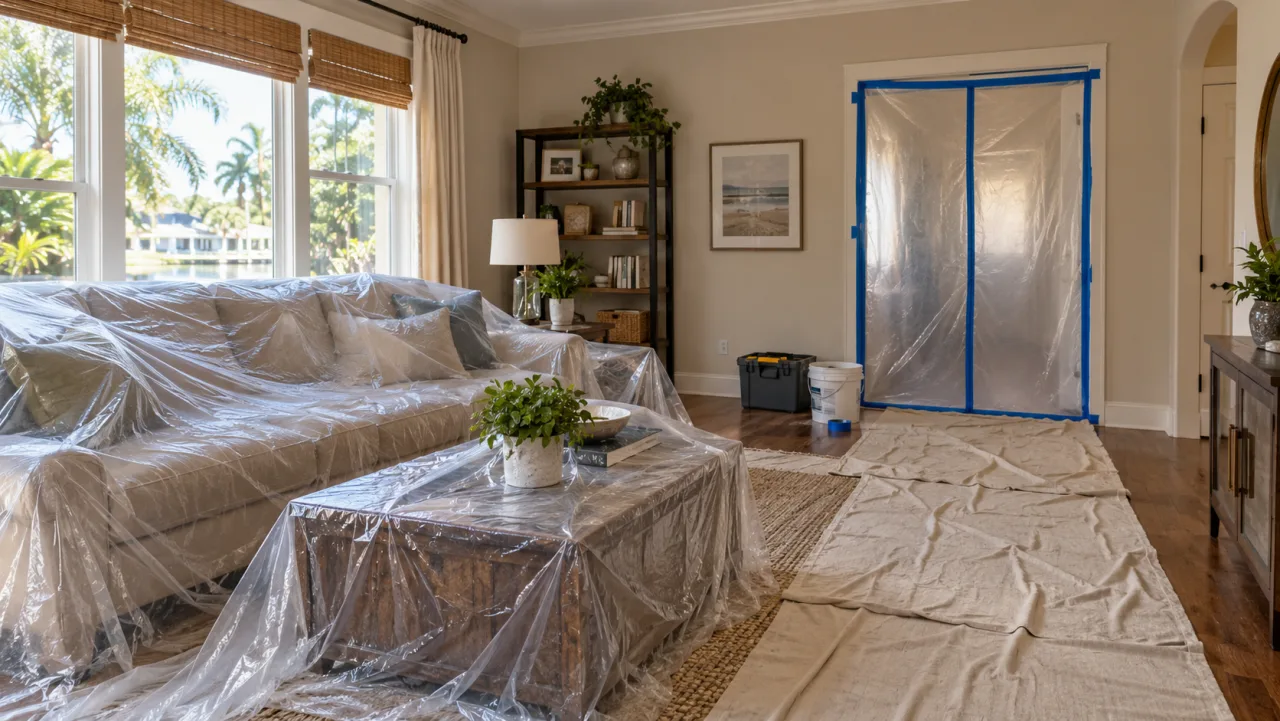
Agree on access and protection with the contractor, move fragile belongings out of the work area and clarify how the room will be used between visits. Do not remove fixtures or disturb damaged material yourself.
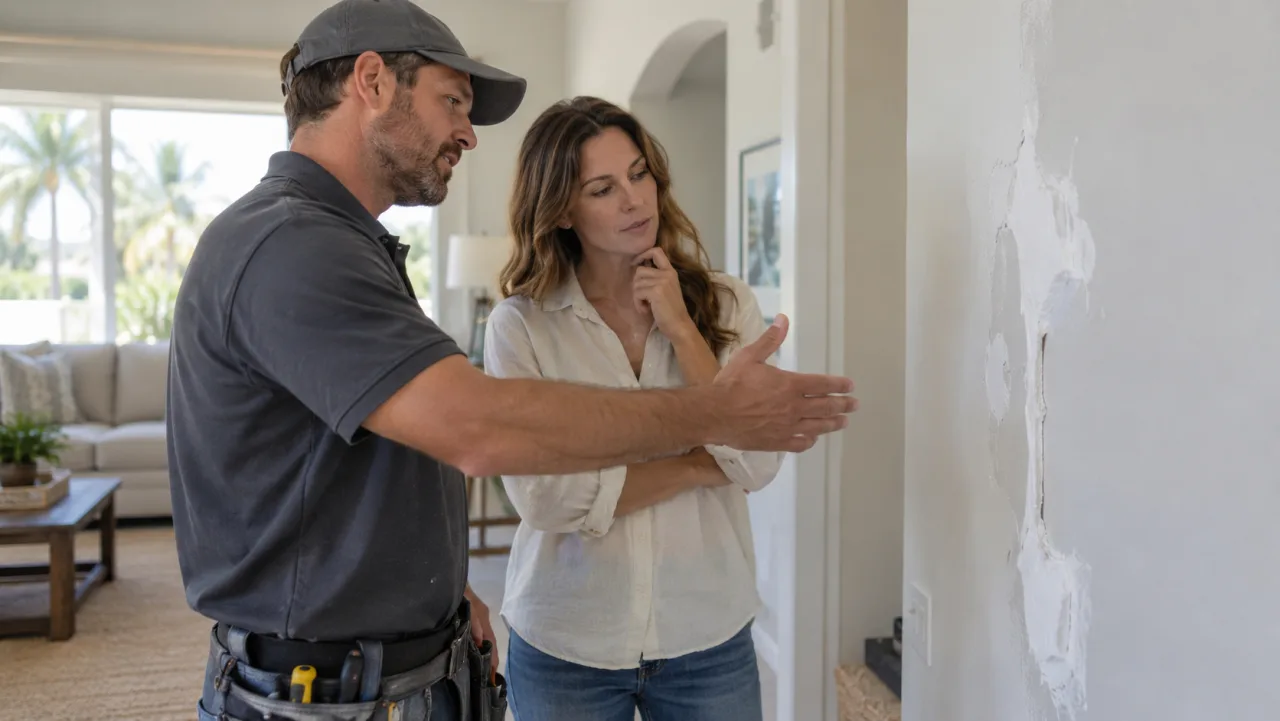
Ask contractors to describe the same finished result in writing. Support, joint finishing, texture, primer, paint, protection and cleanup should be clear before prices are compared.
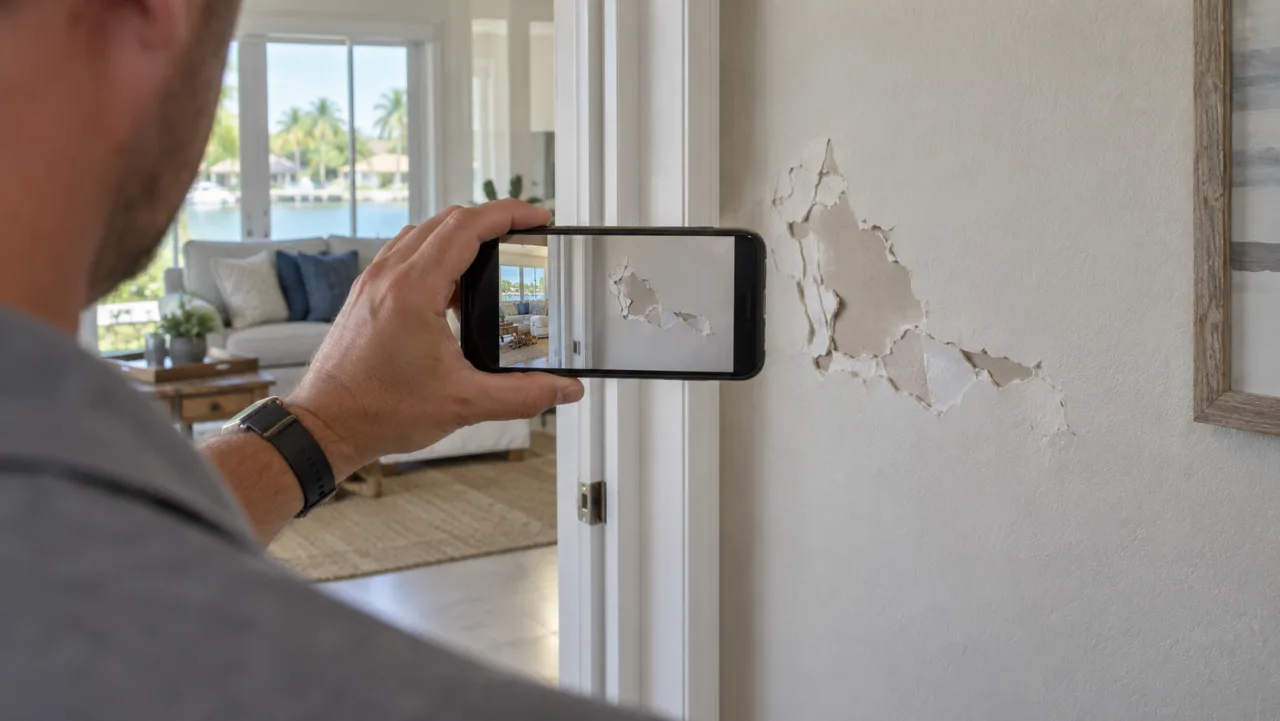
Send a wide view, a damage close-up and an angled texture view. Add the approximate size, the cause of the damage and whether you want the repair paint-ready or painted.
Group the damage by cause and room, resolve active problems first and agree on a consistent finished surface. A collection of fresh patches can remain visible if painting is left unplanned.
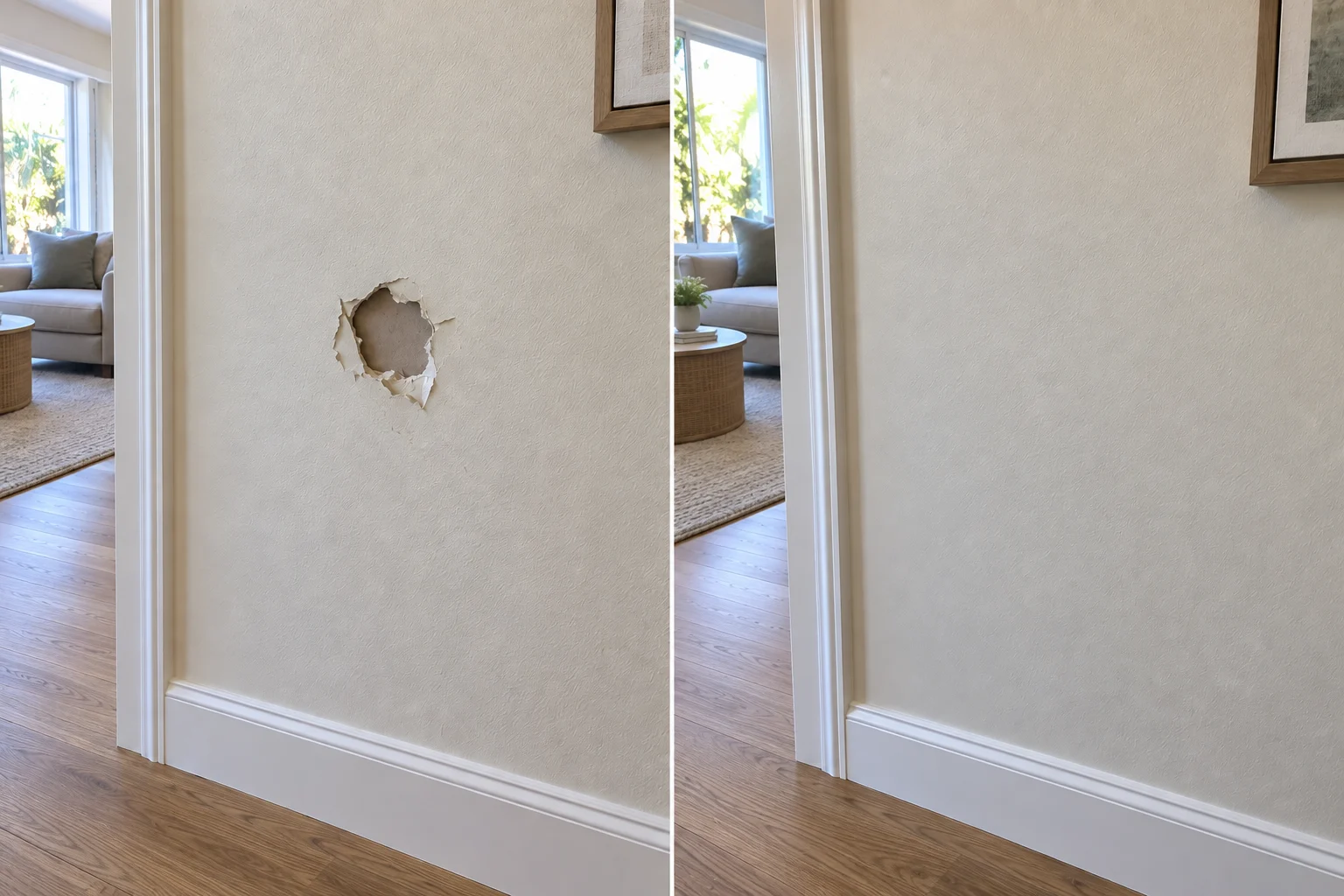
Repair an accidental hole in an interior wall and make the damaged area look like it was never there.
Work completed
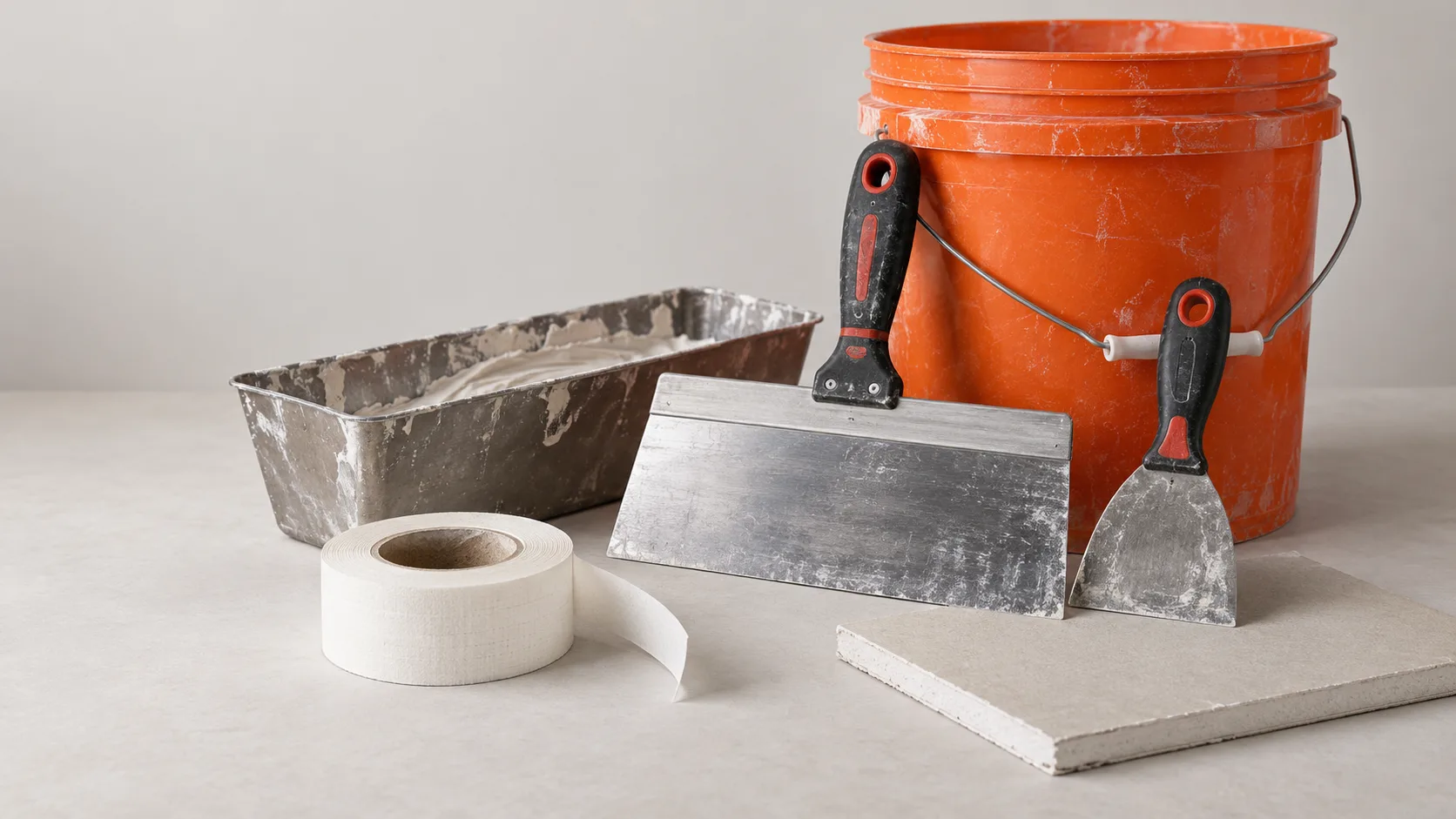
Loose drywall was removed, the opening was reinforced and patched, then finished in multiple coats. The existing wall texture was matched before primer and paint were blended into the surrounding surface.
Send Us a Photo
Show us the damaged wall or ceiling. We’ll review it and call you back.